Stock
What’s left, and what left without a sale.
Count once and Tabworthy works out what should be left from every sale rung up. When you count again, the difference is what left without being sold, in bottles, kilos or pieces.
The count that doesn’t add up
You buy four crates. You count what’s left on Sunday. Somewhere between the two, some bottles were sold, some were broken, one was given to the landlord and a few just aren’t there. Without knowing how many should be left, the count on Sunday is just a number.
Count once, then let the sales do the work
On Pro, stock is off by default and you turn it on for the things you want counted. You count in the units you sell in, in your own words: bottles, cans, pieces, kilos, bags. Sixty bottles, not five crates.
From then on only three things are ever written down:
- A count, which sets the figure.
- A delivery, what came in.
- A write-off: broken, spoiled, given away, eaten by staff.
Everything sold comes off by itself, worked out from what was rung up. You never type “sold 3”. That’s also why two tills selling at once, even offline, can’t get the count wrong between them.
What left without a sale
When you count again, Tabworthy already knows what should be there. The difference between the two is the number you actually wanted: what left without being sold. It’s kept with the count, so you can look back at it next month.
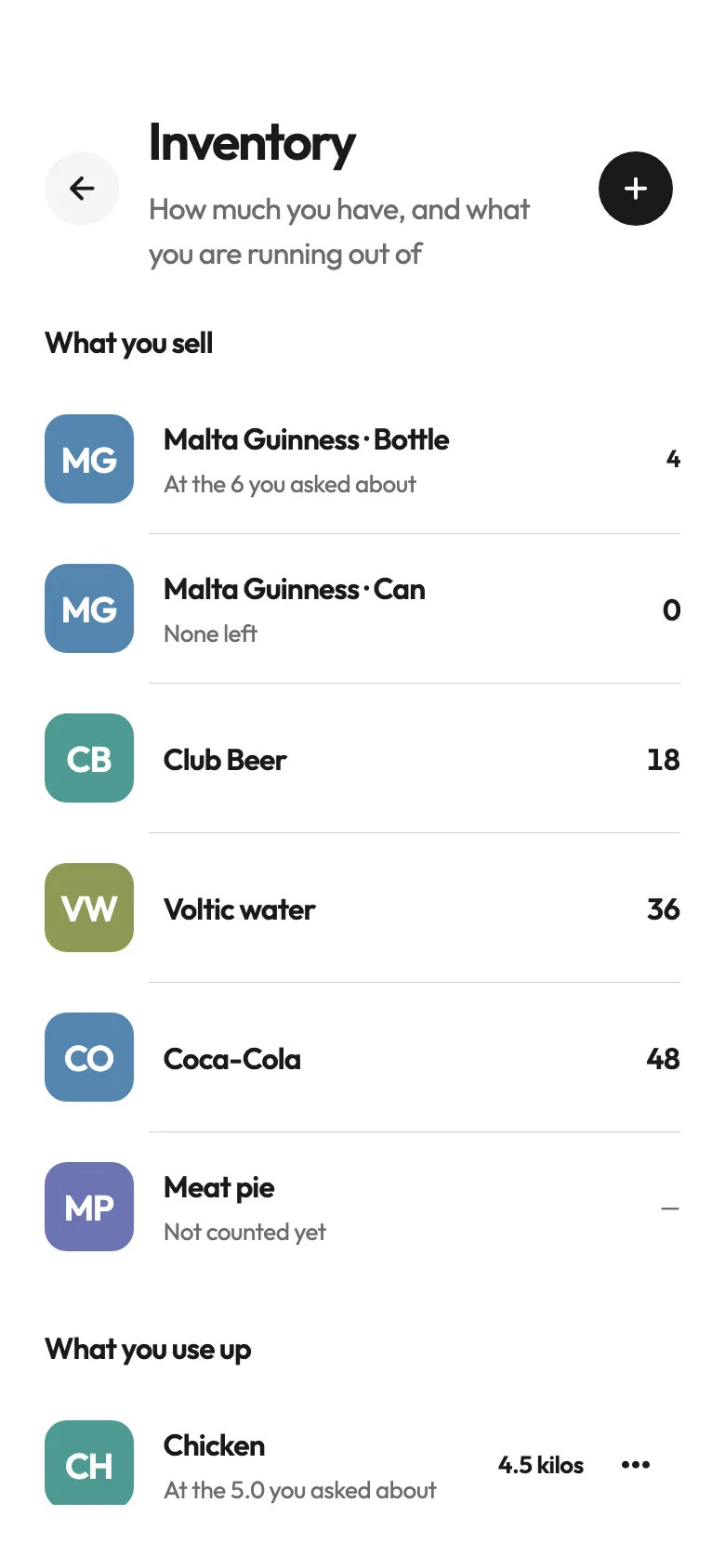
The stock list says it plainly at the bottom: it counts what was rung up, and anything given away or broken is only there if you wrote it off. So write the breakages off, and whatever’s still missing is worth asking about. When the drawer is short has more on finding the hole.
Supplies: the rice behind the plate
A kitchen doesn’t sell rice. It sells jollof. On the screen above, chicken is a supply: something you use up but never sell, counted by the kilo. Each dish can draw on one supply, so every plate of jollof sold takes its rice off the count. You see what should be left without weighing anything after every sale, and running out stops being a surprise at one o’clock.
It’s one supply per dish, never a recipe. The one to pick is the one that actually runs out.
At zero, it warns, it doesn’t refuse
A tile that has hit zero warns you, and a second tap sells it anyway. The count might be old, or a delivery might not be written down yet, and a till that refuses to sell a drink standing in the fridge loses you money. Something you’ve never counted says not counted yet, never 0.
What it doesn’t do yet
It doesn’t keep suppliers or purchase orders, warn you when to reorder, or put a cedi value on what’s missing. It doesn’t track expiry dates or batches, or cost out a full recipe. It counts per place, not stock moved between places. And it doesn’t scan barcodes.
What people ask
Is there a stock management app for a restaurant or bar in Ghana?
Tabworthy counts stock on Pro. You count what you have in the units you sell in, write down deliveries and breakages, and every sale rung up comes off by itself.
Do I have to count after every sale?
No. Count once to set the figure. Sales take themselves off, so you only count again when you want to check, at closing or once a week.
Can it count rice or chicken that goes into dishes?
Yes. Something you use up but never sell, like rice or chicken by the kilo, is a supply. A dish can draw on one supply, so every plate of jollof sold takes its rice off the count.
Will it stop a sale when something is at zero?
No. The tile warns you, and a second tap sells it anyway. A till that refuses a sale because nobody updated a count loses you real money.
Read next
- Who it’s forBars and spotsRun your bar or drinking spot on the phone you have: a tab that keeps every round, bottles counted against what sold, and MoMo that’s there before they go.
- GuideWhen the drawer is shortMost shortages aren’t one thief, they’re a system with holes. Six habits that close them, from a PIN each to counting the drawer every shift.
- GuideFood cost per plateWork out what one plate really costs you, what you keep on it, and what to charge. A plain method for Ghanaian food businesses, with a calculator.
Early access
Want it on your counter?
We’re opening Tabworthy to a first circle of food and drink businesses in Ghana, a few at a time. Ten short questions, about three minutes.